
Quick answer
To make walking workouts harder without running, progress one variable at a time: walk longer, move faster, add hills, or carry a small external load. Start with pace and terrain, then consider a lightly loaded vest only if your gait stays natural and your joints feel good. Two or three purposeful walks each week can build consistency while supporting recommended activity targets.
Key takeaways
- Add duration, pace, hills, and load one at a time so you know what is working.
- Use the talk test: moderate effort should feel purposeful but controllable.
- Treat a weighted vest as an optional progression, not a requirement.
- Track time, route, effort, and how your body feels the next day.
By Jax Morrison, High-Energy Motivator
Make your walk more challenging without turning it into a run
A good walking workout does not need to become a running workout to become more demanding. The simplest progression is to keep your normal route and add five minutes. Once that feels routine, increase the brisk portions, choose a gentle incline, or add a little resistance. Each option raises the challenge while allowing you to keep walking.
The Physical Activity Guidelines for Americans recommend that adults accumulate at least 150 minutes of moderate-intensity activity each week, along with muscle-strengthening activity on two days. You do not need to reach that number immediately. Use it as a direction while building a schedule you can repeat.
Choose the walking progression that solves your problem
Before changing your workout, identify what currently limits you. If you stop because of time, add duration. If your route feels too easy, use short pace intervals. If you want more challenge without moving faster, find a gradual hill. If you already walk consistently and want mild resistance, consider a light vest.
The talk test is a practical way to judge moderate effort. You should be able to speak in sentences, although singing would feel uncomfortable. If you are gasping, losing control of your stride, or forcing your posture, reduce the pace. A harder walk is useful only when you can perform it with steady, repeatable movement.
| Progression | How to use it | When it fits |
|---|---|---|
| Duration | Add five minutes to one or two weekly walks. | You finish feeling fresh but have more available time. |
| Pace | Add four to six one-minute brisk sections with easy walking between them. | Your route is flat and your stride stays relaxed. |
| Terrain | Add a short, gradual hill or rolling route. | You want more effort without carrying equipment. |
| External load | Begin with the lightest practical setting on an easy route. | Regular walking already feels comfortable and consistent. |
Do not stack every progression into one session. A longer walk with hills and a weighted vest may sound efficient, but it becomes difficult to identify why you feel unusually tired or sore. Make one change, repeat it for several sessions, and then decide whether to progress again.
Try this four-week walking progression
This example suits someone who already walks comfortably for about 25 minutes. It is not a test or a rigid rule; shorten the sessions if your current baseline is lower.
Week one: Complete two or three easy-to-moderate walks lasting 25 to 30 minutes. Keep the route mostly flat and rate your effort from 1 to 10 after each walk.
Week two: Keep the duration similar but add four one-minute brisk sections. Walk easily for at least two minutes between them. The brisk portions should feel controlled rather than like a sprint.
Week three: Add five minutes to one walk or choose a route with a few gentle rises. Leave the other walks unchanged so you can compare how your body responds.
Week four: Repeat the option that felt best. Only if your stride, breathing, and next-day recovery remain normal should you trial a small external load on an easy route.
This staggered plan is deliberately unexciting. That is a feature. Repeated, manageable sessions create better feedback than one dramatic workout followed by several missed days.
When a weighted vest makes sense for walking
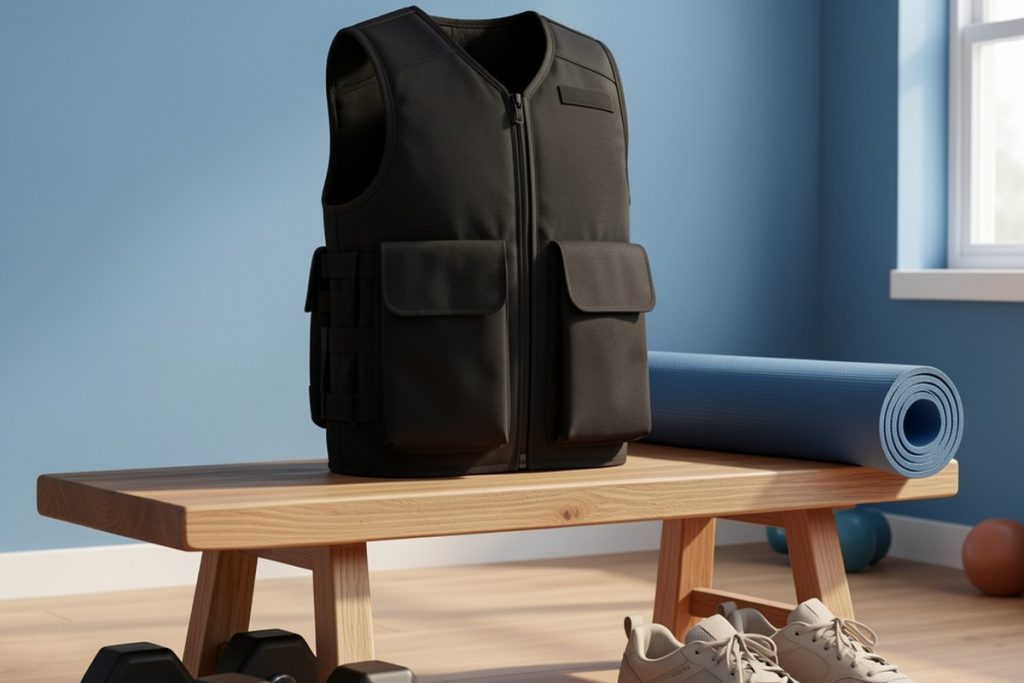
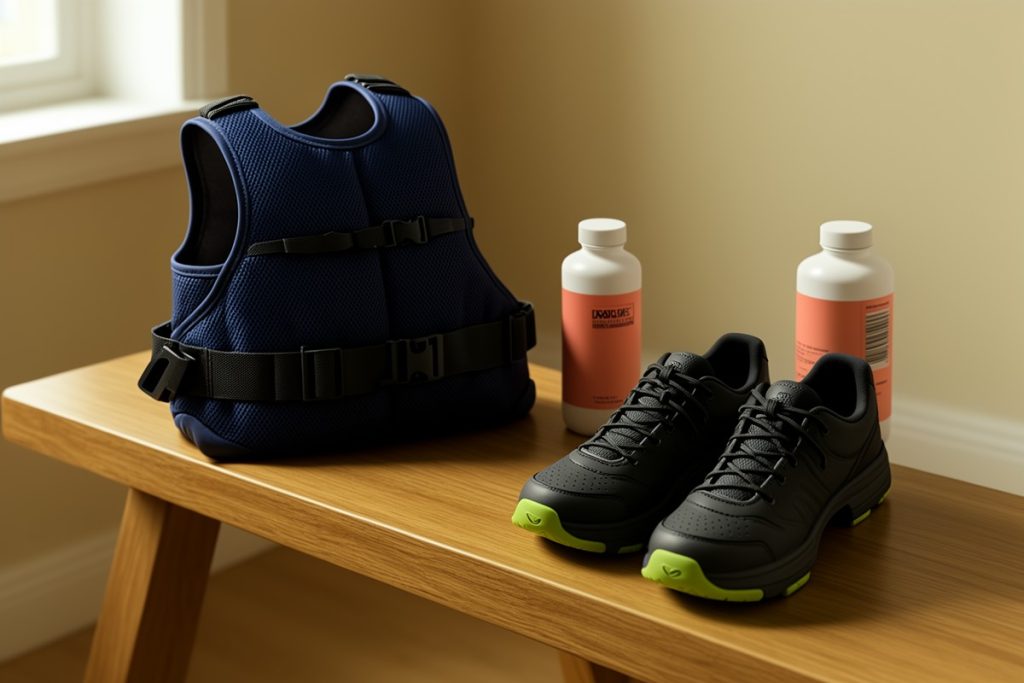
A vest can be useful when you want resistance that stays close to your torso and your regular walking habit is already established. It is not automatically better than hills or brisk intervals. The right choice depends on what you can control, what your joints tolerate, and whether the vest lets you walk normally.
If you want to test light external resistance, the ZELUS Weighted Vest, listed in 6-, 8-, 12-, 16-, 20-, 25-, and 30-pound options with a reflective stripe, is one product to compare. The range provides different starting points, but the listing does not establish that every size will fit every body or feel comfortable for a long walk. Start conservatively, check that the vest stays secure, and stop if you lean forward, shorten your stride, or tighten your shoulders.
Think of the vest as a small progression tool, not a shortcut. If your ordinary walk is inconsistent, equipment will not fix the underlying schedule. Build the habit first, then use resistance only when it improves the workout rather than making it harder to recover.
Keep harder walks joint-friendly
Pay attention to changes during and after the walk. Normal exertion can include heavier breathing, warm muscles, and temporary fatigue. Sharp pain, limping, numbness, dizziness, or discomfort that worsens as you continue is a reason to stop rather than push through. If symptoms persist, seek individual guidance from a qualified health professional.
Comfortable, stable footwear can help, but new shoes are not a substitute for gradual progression. Leave recovery time between harder walks, especially when adding hills or a vest. A useful rule is simple: if the next day feels clearly worse than usual, repeat or reduce the previous week instead of advancing.
Use this pre-walk checklist
- Pick one target: more minutes, faster sections, a hill, or light load.
- Keep the first five minutes easy.
- Check that your shoulders are relaxed and your stride feels natural.
- Use the talk test instead of chasing a dramatic pace.
- Record what changed and how you felt later that day and the next morning.
Make consistency the goal
The best walking upgrade is the one you can repeat. Start with pace, time, or terrain before adding equipment. If you eventually use a vest, let it support a consistent walking habit rather than replace one. That is how a basic walk becomes a stronger, more sustainable fitness session without requiring a running plan.
Last reviewed: 2026-09-25
Sources
- Physical Activity Guidelines for Americans, 2nd edition — U.S. Department of Health and Human Services
- Measuring Physical Activity Intensity — Centers for Disease Control and Prevention