
Quick answer
Build a fall after-school snack station around four choices: one filling staple, one fruit or vegetable, one protein-rich option, and water. Keep ready-to-eat portions at a child-accessible height, use separate containers for dry foods, and store perishable snacks in the refrigerator. A weekly five-minute reset keeps the station fresh without turning it into another household chore.
Key takeaways
- Offer a small mix of snacks instead of leaving out every option at once.
- Pair carbohydrates with protein or fat for a more satisfying snack.
- Use clear, easy-to-open containers for dry foods and refrigerate perishables.
- Reset the station once a week by checking freshness, portions, and cleanup.
By Autumn Cole, Seasonal Lifestyle Curator
Why a fall snack station works better than a crowded snack cupboard
Fall afternoons often create an awkward gap between school pickup and dinner. Children may arrive hungry, but the available choices are either hidden in the pantry, difficult to portion, or so visible that everyone grabs a snack repeatedly. A dedicated station solves the access problem without requiring a large stockpile.
The goal is not to create a picture-perfect display. It is to make one reasonable snack easy to find, easy to serve, and easy to put away. Limit the daily selection to three or four options. This gives children some independence while keeping you in control of what needs refrigeration, how much gets eaten, and what must be replenished.
Choose snacks that match the season and the afternoon
Fall is a useful time to combine familiar shelf-stable foods with produce that is easy to find at the market. Apples, pears, clementines, roasted squash, pumpkin seeds, oats, and whole-grain crackers can all fit naturally into an autumn routine. You do not need specialty ingredients; the best station uses foods your household will actually eat.
Use this simple formula when choosing the lineup:
| Snack role | Practical options | Why it helps |
|---|---|---|
| Filling staple | Whole-grain crackers, oat bites, popcorn, or pretzels | Provides an easy base when hunger is immediate |
| Produce | Apples, pears, clementines, or sliced vegetables | Adds freshness, color, and variety |
| Protein or fat | Pumpkin seeds, sunflower-seed butter, cheese, or yogurt | Can make the snack more satisfying |
| Drink | Water, milk, or an unsweetened beverage | Offers a simple alternative to sugary drinks |
For younger children, adjust the foods to their age and eating ability. Whole nuts, hard raw vegetables, and other choking hazards may not be appropriate. Cut or prepare foods according to guidance from your child’s health professional rather than assuming a container or portion size makes a food safe.
Set up the station in a small, visible space
Choose one location that is convenient but not in the busiest part of the kitchen. A lower shelf, a designated drawer, or one section of the counter can work. Keep water nearby if possible, and place napkins or a washable cloth within reach. Avoid positioning the station beside the stove, toaster, or any area where spills could create a hazard.
Start with only a few containers. Put one or two days’ worth of dry snacks in each rather than filling every available space. A child can choose from a short lineup without emptying a full bag onto the floor. If the snack station is for adults, the same approach helps with work-from-home afternoons and reduces impulse grazing.
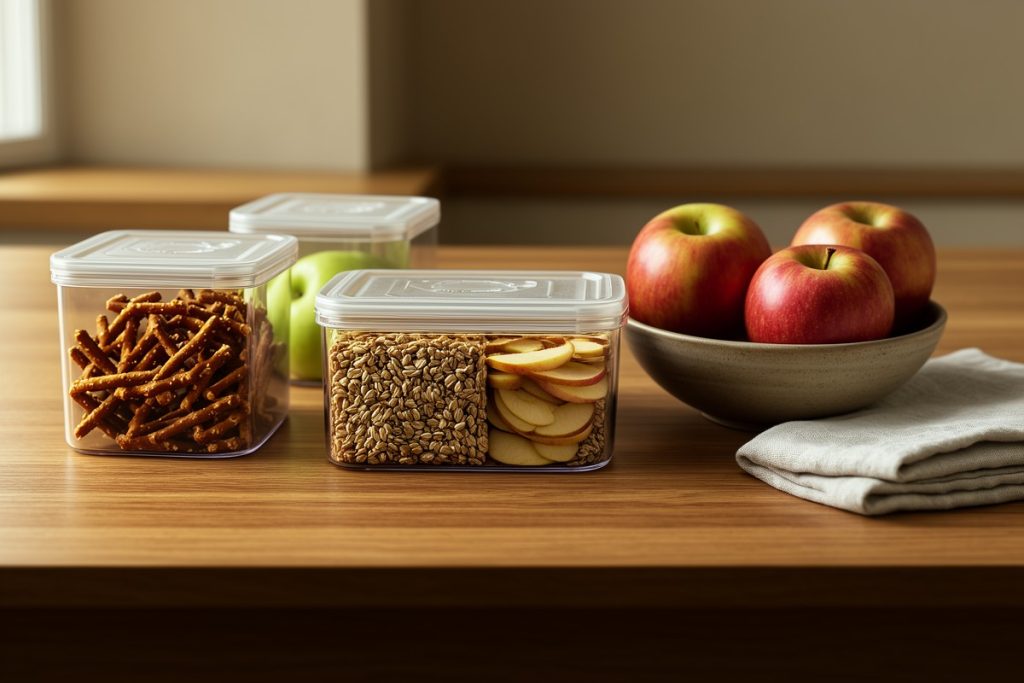
For a ready-made option, the Airtight Food Storage Containers Set may suit dry snacks such as crackers, cereal, or pretzels because the set is marketed for pantry storage and includes multiple lidded containers. It is not a complete solution for every food: fresh produce and refrigerated items still need appropriate storage, and you should measure your shelf and check that the lids are comfortable for the people using them before buying.
Use portions that encourage choice without creating waste
Portioning does not have to mean measuring every crumb. Put enough food in a small bowl, cup, or container for one snack period, then store the main supply separately. This keeps the station tidy and makes it easier to notice what is actually being eaten.
For foods such as popcorn, crackers, or dried fruit, prepare a few portions during the weekly reset. Keep sticky, oily, or strongly scented foods in containers that are easy to wash. If a dry snack tends to go stale quickly, prepare fewer portions and refill more often rather than assuming a tightly closed lid will preserve it indefinitely.
Offer combinations rather than isolated foods. An apple with sunflower-seed butter, crackers with cheese, or yogurt with oats gives people a clear next step when one item alone is not enough. Let children choose one item from two categories if that fits your household rules; it creates autonomy without making the snack decision feel unlimited.
A five-minute weekly reset checklist
- Remove anything stale, damp, leaking, or past its safe storage window.
- Wash and completely dry reusable containers before refilling them.
- Move perishable foods to the refrigerator and replenish only what will be eaten soon.
- Check whether portions are too large, too small, or consistently ignored.
- Choose one seasonal addition, such as pears, pumpkin seeds, or oat crackers.
Keep the station safe and easy to maintain
Dry foods can usually stay in a clean, dry container, but the container does not replace basic food-safety habits. Wash produce before serving, keep refrigerated foods cold, and avoid leaving perishable items at room temperature for extended periods. The U.S. Department of Agriculture advises using the refrigerator promptly for foods that require chilling and checking storage guidance for specific items.
Keep the station away from direct sunlight and heat, which can affect food quality. Inspect containers for cracked plastic, warped lids, or residue around the seal. A container that is difficult to open may be technically useful but practically wrong for the person expected to use it.
Every Friday or Sunday, ask three questions: What disappeared first? What was ignored? What created the most mess? Use the answers to revise the next week’s selection. The most successful fall snack station is not the fullest one; it is the one that makes a realistic afternoon routine calmer, cleaner, and easier to repeat.
Last reviewed: 2026-10-09
Sources
- Leftovers and Food Safety — USDA Food Safety and Inspection Service guidance on refrigerating perishable foods.
- FoodKeeper App — FoodSafety.gov storage guidance for common foods.