
Quick answer
A mini Pilates ball can make a short desk-break mobility routine easier to follow by giving your legs a gentle positioning cue. Use it for controlled hip, ankle, and posture movements rather than aggressive squeezing or deep stretching. Five minutes of movement can interrupt sitting, but it does not replace regular walking, strength training, or medical care for persistent pain.
Key takeaways
- Use the ball as a light alignment aid, not a tool to crush between your knees.
- Take movement breaks throughout the workday instead of waiting until you feel very stiff.
- Perform each exercise slowly and stay within a comfortable range of motion.
- A stable chair and clear floor space matter more than completing every exercise.
- Stop for sharp pain, numbness, dizziness, or symptoms that keep getting worse.
Why desk workers need a mobility break
Hours at a desk can leave your hips, ankles, and upper back feeling restricted because they have stayed in similar positions for too long. That stiffness does not automatically mean something is damaged, but it is a useful reminder to change position and move more often.
A short mobility break is not a substitute for a complete fitness plan. The Physical Activity Guidelines for Americans recommend that adults accumulate 150 to 300 minutes of moderate-intensity aerobic activity each week, along with muscle-strengthening activity on at least two days. A five-minute routine simply helps make an otherwise sedentary workday less static.
The benefit of a mini Pilates ball is practical rather than magical. Its shape gives you a physical target for alignment and controlled movement. That can make instructions such as “keep your knees tracking forward” easier to understand and repeat.
What a mini Pilates ball can—and cannot—do
A small exercise ball can support gentle positioning, light stability work, and mobility drills. It may help you pay attention to whether your knees are collapsing inward or whether you are shifting your weight unevenly. It can also make a short routine feel more purposeful than simply standing up and stretching at random.
It cannot fix poor workstation setup, eliminate all discomfort, or replace professional assessment. Avoid treating the ball as a cure for hip pain, back pain, or an injury. The goal is to create a simple movement prompt that fits into your day.
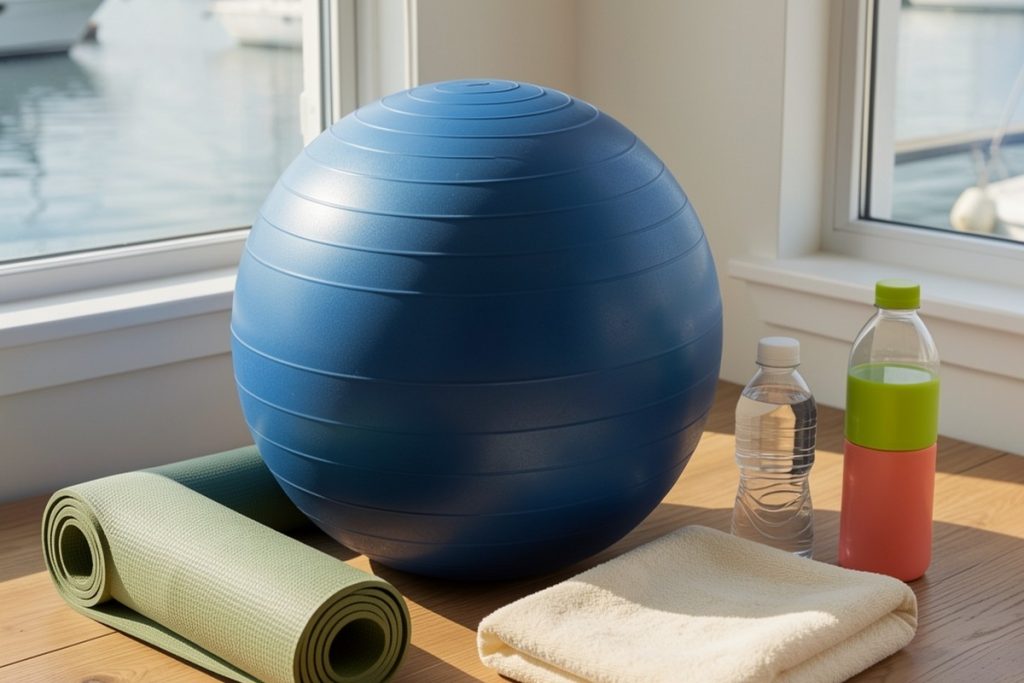
The approved kisnbld Small Exercise Ball is listed as a 9-inch mini Pilates ball with anti-burst and slip-resistant features, and its stated uses include stability, stretching, physical therapy, and home or office workouts. Those details make it a reasonable candidate for a desk-break routine, but read the manufacturer’s instructions, inflation guidance, and weight limits before using it. Listed features do not guarantee that a product is suitable for every person or exercise.
Prepare your space before moving
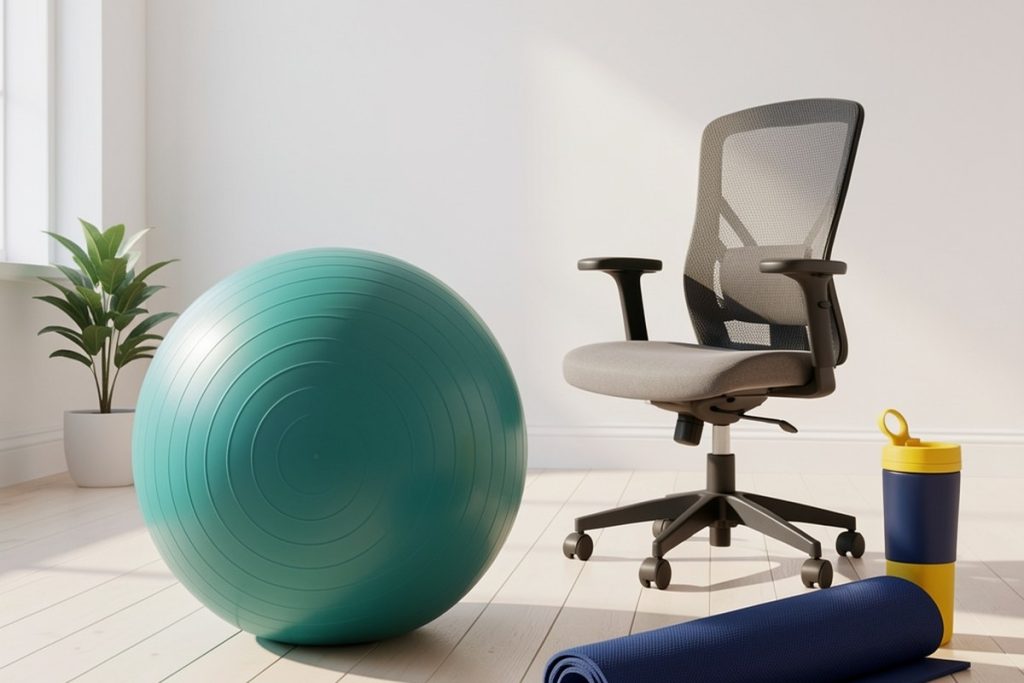
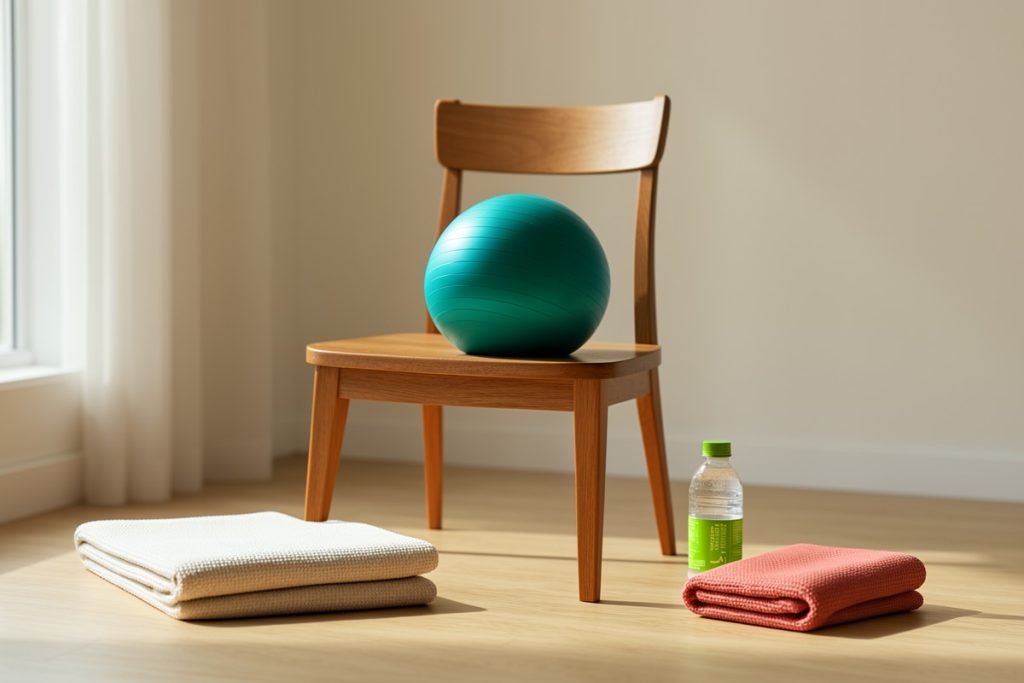
Use a stable chair that does not roll or swivel. Clear enough floor space to extend one leg without hitting a desk or cabinet. Keep your feet close to the floor when seated so you can regain balance easily. The ball should feel slightly yielding, not rock-hard, and it should remain intact without visible damage.
Wear shoes or go barefoot according to what gives you the most control. Keep your breathing relaxed, and avoid trying to create a dramatic stretch. Mobility work should feel manageable and repeatable, especially when you are fitting it between meetings.
- Position the chair on a nonslip surface.
- Place the ball where you can reach it without twisting.
- Keep water nearby if your workday is long.
- Choose a five-minute time slot you can repeat daily.
A five-minute mini Pilates ball mobility routine
1. Seated alignment reset: one minute
Sit near the front of the chair with both feet flat and your knees comfortably bent. Place the ball lightly between your knees. Do not squeeze hard. Sit tall, let your shoulders relax, and take five slow breaths. As you exhale, allow your ribs to soften while keeping your pelvis steady. Think of this as a reset for your sitting position, not a strength test.
2. Alternating knee openings: one minute
Remove the ball and keep both feet planted. Let your right knee move a few inches outward, then return it to center. Repeat with the left knee. Continue for six to eight repetitions on each side. Keep your torso quiet and avoid leaning to follow the movement. Use a smaller range if one hip feels restricted.
3. Supported hip hinge: one minute
Place the ball on the floor a short distance in front of you as a visual target. With your feet about hip-width apart, lean forward from the hips while keeping your spine comfortable. Let your hands rest on your thighs or the chair seat, then press through your feet to sit tall again. Repeat six times. Do not place your full body weight on the ball.
4. Seated ankle mobility: one minute
Extend one leg until the heel is lightly supported or hovering just above the floor. Slowly point and flex the ankle eight times, then make four small circles in each direction. Switch sides. Keep the movement smooth and controlled rather than forcing your foot into a deeper stretch. This is especially useful after a long period with your feet in one position.
5. Stand and walk: one minute
Set the ball aside and stand behind the chair. Take a few easy steps, roll your shoulders gently, and reach overhead only as far as comfortable. Breathe normally and notice whether you feel more alert or less stiff. Finish with an easy walk to refill your water or return to your task.
Match the routine to your workday
| Situation | Best option | Focus |
|---|---|---|
| After a long meeting | Alignment reset and knee openings | Change position without rushing |
| Before a focused work block | Complete five-minute routine | Move hips, ankles, and shoulders |
| Feeling generally stiff | Stand, walk, and breathe | Choose easy movement over intense stretching |
| Feeling sharp or unusual pain | Stop and seek appropriate advice | Do not push through symptoms |
Use the routine as a menu rather than a pass-or-fail challenge. If you have only two minutes, perform the seated reset and take a short walk. If you have more time, repeat the sequence once without increasing the intensity.
How often should you take a desk movement break?
There is no single perfect schedule for everyone. A practical starting point is to move for a minute or two every 30 to 60 minutes of concentrated sitting, then complete the full routine once or twice during the workday. Use calendar reminders, the end of a video call, or a regular water refill as a trigger.
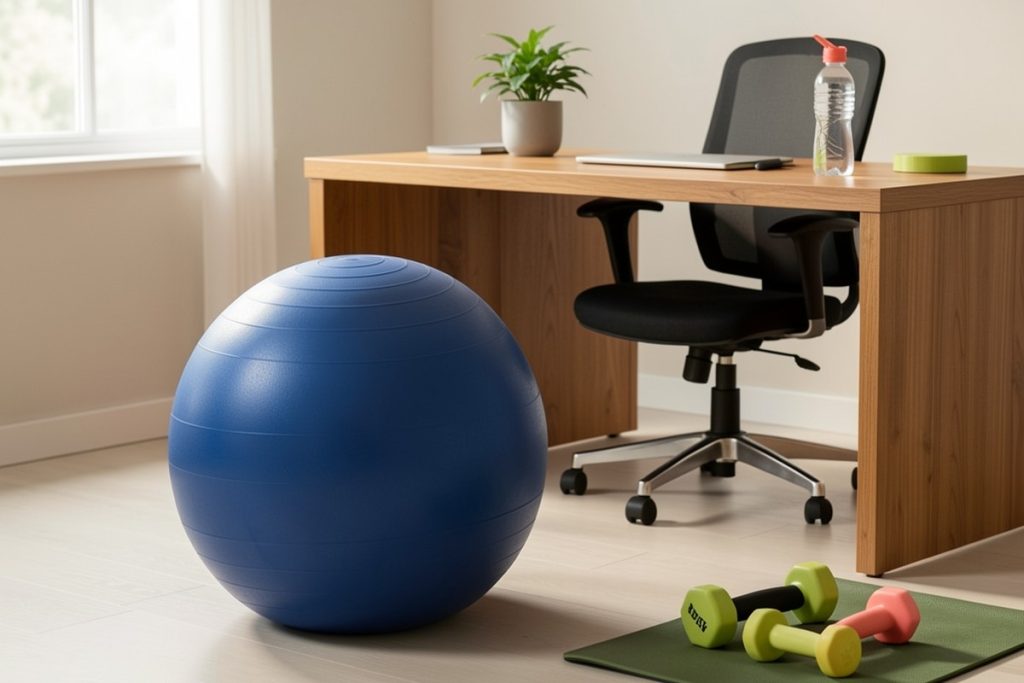
The Occupational Safety and Health Administration’s Computer Workstations eTool emphasizes arranging a workstation to support neutral positioning and reducing awkward postures. A ball cannot correct a monitor that is too low or a chair that does not support you, so combine movement breaks with a sensible desk setup.
Track the habit, not your flexibility. Write down how many movement breaks you take for one week. If the routine repeatedly causes discomfort, modify it or choose walking instead.
When to stop or ask for guidance
Stop immediately if you experience sharp pain, new numbness, tingling, unusual weakness, dizziness, or symptoms that increase with each repetition. Do not perform standing movements on a slippery surface or use a chair that rolls unexpectedly.
If you are recovering from an injury, have a diagnosed joint or neurological condition, are pregnant, or have been advised to restrict activity, ask a qualified healthcare professional how to adapt the routine. Persistent pain that affects sleep, walking, work, or daily activities deserves individualized assessment rather than another online exercise variation.
Gentle muscular effort or a mild stretch can be normal. Pain is not a requirement for progress. The most useful desk routine is one that leaves you feeling ready to move—not one that leaves you needing recovery.
Make mobility part of a bigger fitness plan
Short desk breaks work best alongside regular walking, resistance training, recreational activity, and enough recovery. They help you interrupt long periods of stillness, but they are only one piece of fitness. Start with one reliable cue, such as moving after lunch or after your second meeting, and build from there.
Consistency beats complexity. Keep the ball where you can see it, use the same five-minute sequence for a week, and adjust based on how your body responds. The aim is simple: more comfortable movement during the workday and a clearer path toward being active outside it.
Last reviewed: 2026-09-28
Sources
- Physical Activity Guidelines for Americans, 2nd edition — U.S. Department of Health and Human Services.
- Computer Workstations eTool — Occupational Safety and Health Administration.
- How Much Physical Activity Do Adults Need? — Centers for Disease Control and Prevention.