Quick answer
A sustainable small-space core workout should be short, repeatable, and easy to scale—not an exhausting daily challenge. Combine controlled back extensions, dead bugs, side planks, and supported crunches two or three times weekly. A compact Roman chair can add back-extension and dip-station options, but it is only useful if it fits your space, feels stable, and supports pain-free movement.
Key takeaways
- Train your core two or three times per week, leaving recovery time between sessions.
- Use slow repetitions and stop when your form changes, rather than chasing fatigue.
- Pair trunk exercises with walking, strength work, and mobility for a more complete routine.
- A folding Roman chair may be useful in a small home gym, but check stability, fit, storage, and exercise comfort before buying.
What makes a home core workout sustainable?
Sustainable fitness is not the same as doing the hardest workout available. It means choosing a routine you can repeat around work, family, energy levels, and the equipment you actually have. For a small-space workout, that usually means fewer exercises, clear progressions, and a setup that can be used without a long preparation ritual.
Your core also does more than produce visible abdominal movement. It helps transfer force between your upper and lower body and supports controlled bending, bracing, and rotation. A useful session should therefore include more than crunches. Combine an anti-extension exercise, such as a dead bug; a side-bracing exercise, such as a side plank; and a controlled posterior-chain movement, such as a hip hinge or back extension.
A practical 20-minute routine for limited space
Complete this routine two or three times per week. Move slowly, breathe continuously, and rest for about 30 to 60 seconds between exercises. If you are returning after a long break, begin with one or two rounds instead of trying to complete the full session.
| Exercise | Starting dose | What to focus on |
|---|---|---|
| Dead bug | 6–8 per side | Keep your lower back gently controlled as opposite limbs move. |
| Side plank | 15–25 seconds per side | Keep your body long rather than sinking through the shoulder. |
| Bodyweight hip hinge | 8–12 repetitions | Send your hips back while keeping your spine comfortably neutral. |
| Supported back extension | 6–10 repetitions | Lift only to a straight line; do not force a deep arch. |
| Incline push-up or supported dip | 6–10 repetitions | Choose the version that lets you control the full movement. |
Rest for one or two minutes after each round. The routine should feel challenging but manageable, with enough control left to repeat the session later in the week. If a movement causes sharp pain, numbness, or symptoms that travel down an arm or leg, stop and seek appropriate medical guidance.
How to use a Roman chair without overdoing it
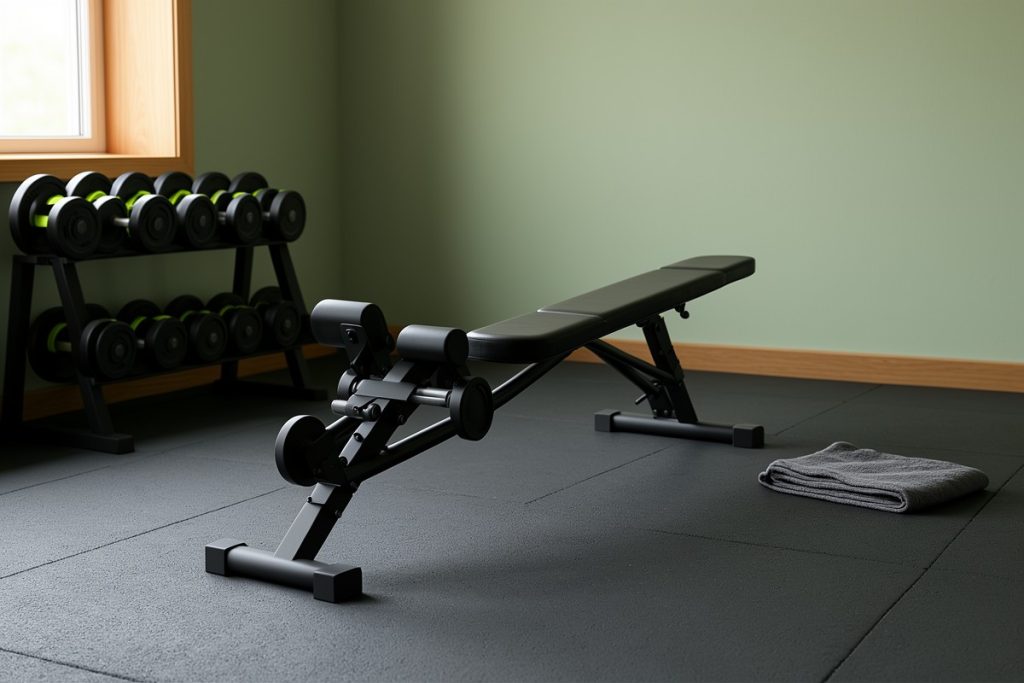
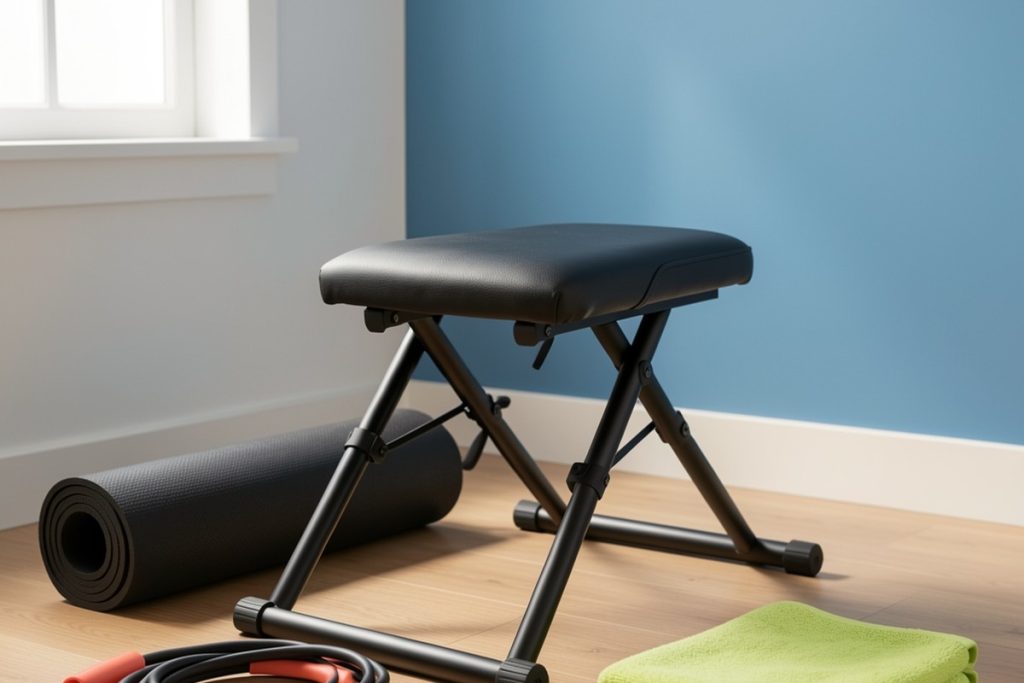
A Roman chair can be a practical choice when you want one compact station for back extensions, abdominal work, and upper-body pressing variations. The Sunny Health & Fitness Multi-Function Roman Chair is listed with adjustable height, a fold-flat design, and a built-in dip station. Those features may suit someone who wants more exercise options than a mat provides while still needing equipment that can be stored after training.
That does not make it essential. A mat-based routine can train the core effectively, and a chair adds a cost, a storage decision, and another piece of equipment to learn. Before choosing one, confirm that the height adjustment suits your body, the frame remains stable on your floor, the padding is comfortable, and the folded footprint works in your storage area. Also check the current manufacturer specifications and safety guidance rather than assuming every model fits every user.
Form cues that make the routine safer and more useful
For back extensions, brace lightly before moving and stop when your torso reaches a straight line with your legs. The goal is controlled hip and trunk movement, not throwing your chest upward. For crunches, keep the movement small enough that your neck stays relaxed. Pulling on your head or rushing through repetitions usually reduces the value of the exercise.
For dips, use a range of motion you can control without shoulder pinching. If bodyweight dips are too demanding, choose incline push-ups or reduce the range. Core training should develop control, not prove how much discomfort you can tolerate. A slower repetition with consistent breathing is often a better starting point than a larger number performed quickly.
Use this checklist before every session
- Clear enough floor space to move without striking furniture.
- Check that any equipment is fully adjusted, level, and stable.
- Choose a variation that allows smooth, pain-free movement.
- Keep one or two repetitions in reserve during your first few weeks.
- Record the exercise, repetitions, and how difficult the session felt.
How to progress without chasing exhaustion
Progress one variable at a time. You might add two repetitions, extend a plank by five seconds, or complete one additional round. You can also improve the quality of a movement by using a slower lowering phase or taking shorter rests. Do not increase volume, difficulty, and frequency together; that makes it harder to identify what caused excessive soreness or irritation.
A simple four-week approach is to repeat the same routine for two weeks, then make one modest change in week three. In week four, keep the change only if you are recovering well. If your sleep, schedule, or joints are struggling, reduce the volume temporarily. Consistency comes from adapting the plan, not from treating every missed or shortened workout as failure.
Where core work fits in a complete fitness plan
Core sessions are only one part of sustainable fitness. Public-health guidance also emphasizes regular aerobic activity and muscle-strengthening work across the week. Add comfortable walking, cycling, dancing, or another activity you enjoy, and train major muscle groups with movements such as squats, rows, presses, and carries when appropriate.
Think of the routine as a foundation rather than a test. A 20-minute session completed consistently can support your broader training more effectively than an intense workout you avoid for the next two weeks. Choose equipment because it solves a clear problem—such as limited space or a need for adjustable exercise options—not because more equipment automatically means better results.
Last reviewed: 2026-11-02
Sources
- Physical activity — World Health Organization
- Physical Activity Guidelines for Americans, 2nd edition — U.S. Department of Health and Human Services
- Adult Activity: An Overview — Centers for Disease Control and Prevention