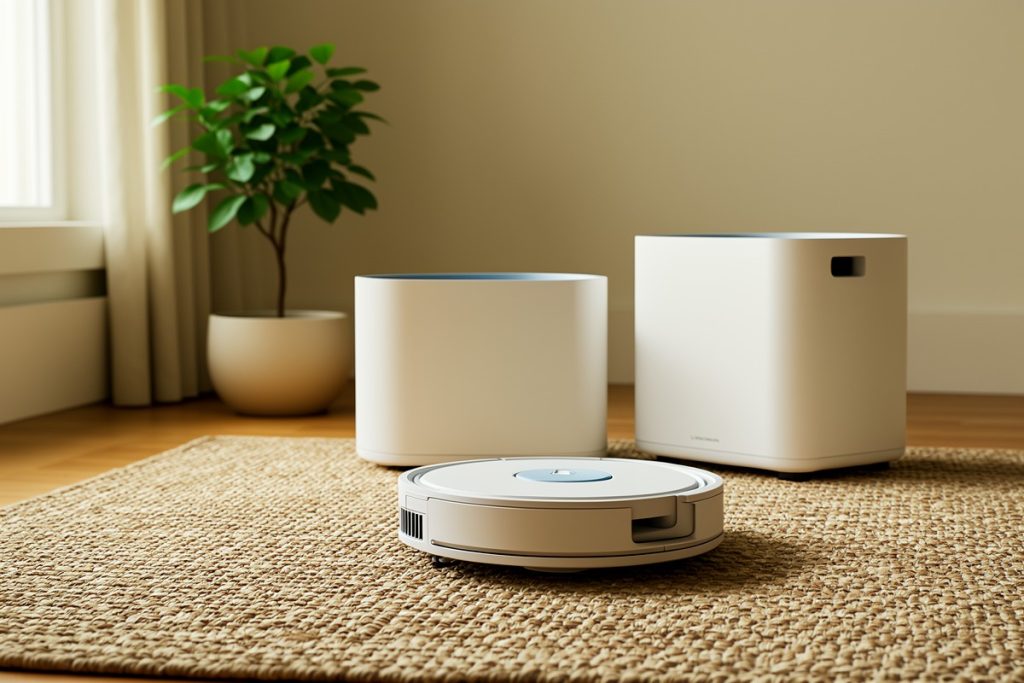
Quick answer
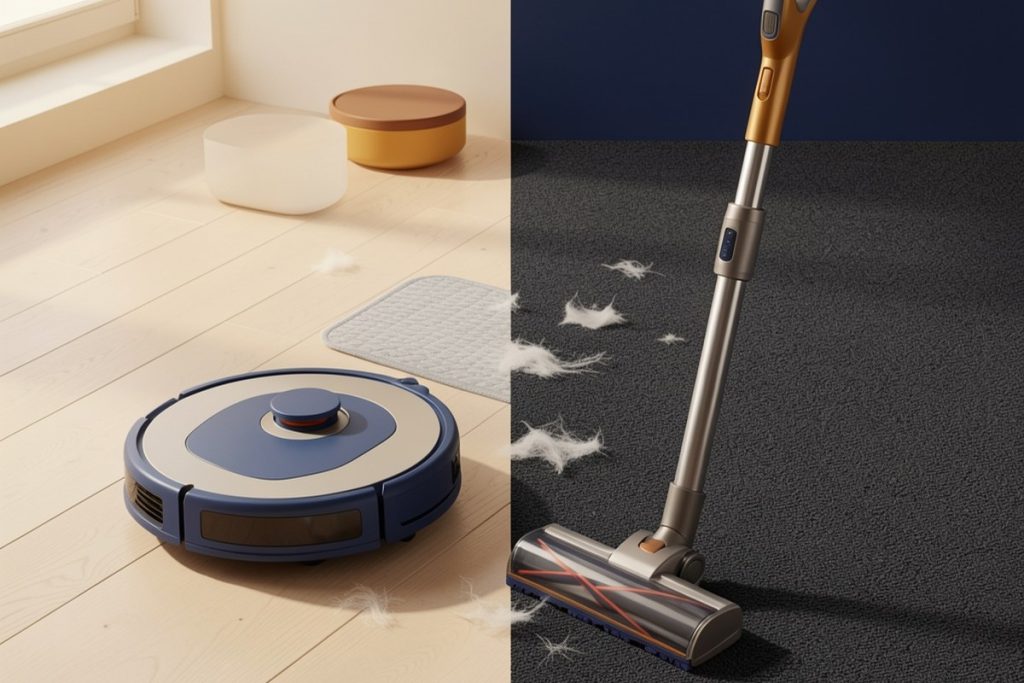
An air purifier is the better choice for airborne particles, while a robot vacuum is better for settled dust, tracked-in debris, and pet hair on floors. They solve different parts of the problem, so neither replaces the other. For allergy-conscious homes, choose based on whether your main concern is breathing-room particles or keeping floors from becoming a dust reservoir.
Key takeaways
- Air purifiers target particles suspended in room air; vacuums remove material after it settles.
- A robot vacuum can reduce routine floor-cleaning work, but it does not clean the air.
- For allergy concerns, source control, ventilation, careful cleaning, and moisture management still matter.
- Choose an air purifier by suitable room size, airflow, filter maintenance, and noise—not by marketing claims alone.
- The Roborock Q7 M5+ makes the most sense for people prioritizing automated floor care, not as a substitute for an air cleaner.
Robot vacuum and air purifier: different jobs, different results
Comparing these products is useful only if you separate the problem into two locations: the floor and the air above it. Dust, pollen, pet dander, and other particles can settle on floors and furnishings. Normal movement can disturb some of that material, while other particles remain embedded in rugs or gathered along edges.
A robot vacuum addresses the settled portion by collecting debris from accessible floor surfaces. An air purifier pulls room air through a filter and can capture some airborne particles, depending on the cleaner’s collection efficiency, airflow, room conditions, and maintenance. The U.S. Environmental Protection Agency notes that indoor particulate matter can come from cooking, combustion, outdoor air, biological sources, and other household activities. Cleaning floors is therefore helpful, but it is not the same intervention as filtering air.
Neither device removes every indoor-air problem. For example, an air purifier designed for particles is not automatically a solution for gases, odors, moisture, or radon. Likewise, a robot vacuum cannot replace ventilation, a kitchen exhaust fan, a dehumidifier, or professional help for a water-damaged home.
Side-by-side comparison for allergy-conscious homes
| Question | Robot vacuum | Air purifier |
|---|---|---|
| Primary target | Settled dust, crumbs, hair, and floor debris | Some airborne particles circulating in a room |
| Best location | Hard floors and suitable low-pile rugs | Occupied rooms where air is being circulated |
| Most useful timing | Routine cleaning before debris accumulates | During and after particle-generating activities, as appropriate |
| Maintenance | Emptying or replacing the dust bag, cleaning brushes, and checking wheels | Replacing or cleaning filters according to the manufacturer |
| Main limitation | Does not remove particles already suspended in room air | Does not pick up debris from floors, rugs, corners, or furniture |
| What to verify | Navigation, floor clearance, dock design, brush access, and app controls | Room suitability, airflow, particle-filter design, noise, and filter cost |
When a robot vacuum is the better purchase
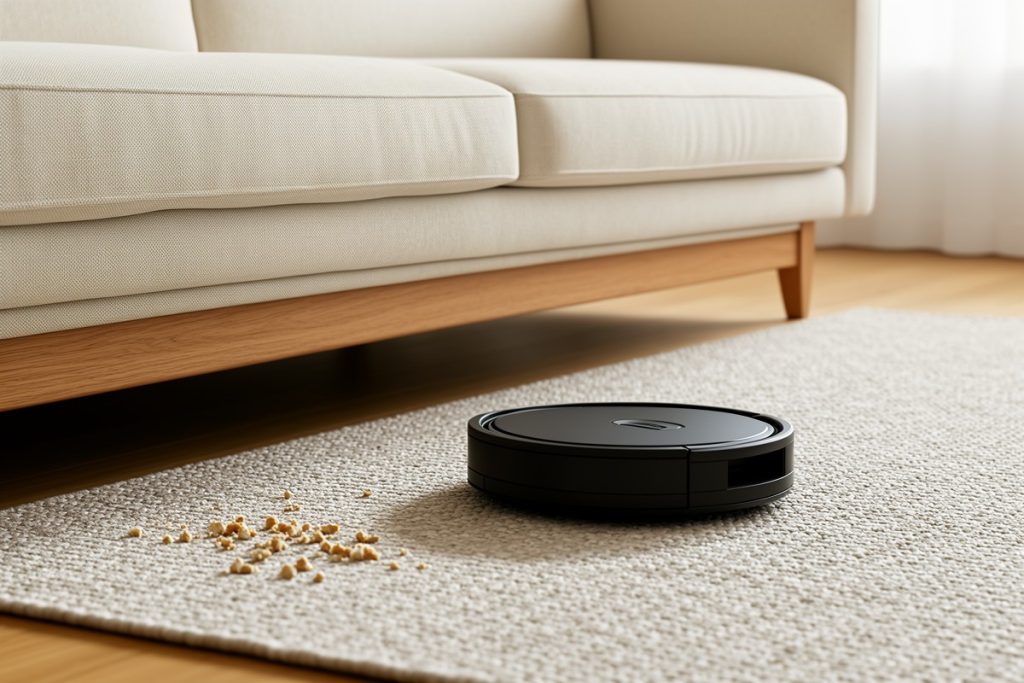
Choose a robot vacuum first when your practical problem is dirty flooring between manual cleanings. This is especially relevant in homes with frequent foot traffic, shedding pets, children, entryway grit, or a schedule that makes daily vacuuming unrealistic. Automation can make a cleaning routine more consistent because the device handles repeated passes without requiring you to drag out a full-size vacuum each time.
Look beyond suction figures. A useful comparison should include whether the robot can navigate your floor plan, cross thresholds, avoid cords, reach beneath furniture, and operate without constant rescue. A self-emptying dock can reduce the frequency of handling collected debris, but it does not eliminate maintenance. Brushes, sensors, wheels, filters, and the dock still need attention.
The Roborock Q7 M5+ Robot Vacuum and Mop is a reasonable fit for shoppers whose priority is scheduled floor care. Its catalog description lists a self-emptying dock, LiDAR navigation, app control, a dual anti-tangle system, and vacuuming with mopping. Those features address convenience and floor maintenance. They should not be interpreted as proof that the device improves indoor air quality or prevents allergy symptoms.
The mopping function is also a separate benefit. It may help with fine residue on compatible hard floors, but it does not replace vacuuming rugs, cleaning upholstery, washing bedding, or dealing with the source of recurring dust.
When an air purifier is the better purchase
An air purifier deserves priority when your concern is airborne particles in a particular room. That may include particles produced during cooking, smoke that enters the home, seasonal outdoor pollution, or dust that becomes airborne during activity. Placement matters: a purifier hidden behind furniture cannot move air effectively, and a unit that is too small for the room may provide less benefit than expected.
Compare the room-size guidance, airflow, filter construction, operating noise, replacement-filter availability, and energy use. The EPA explains that an air cleaner’s performance depends on both how efficiently it collects pollutants and how much air it draws through the filter. A high-efficiency filter with very limited airflow is not automatically a strong choice.
Maintenance is part of the purchase decision. A loaded filter can restrict airflow, while postponing replacement may undermine the device’s intended operation. Follow the manufacturer’s schedule rather than assuming a filter lasts a fixed amount of time in every home.
How to choose for your specific home
Start with the problem you can describe most clearly. If you see dust collecting on floors, find hair along baseboards, or want less daily sweeping, begin with a vacuum. If the issue is smoke, cooking particles, or airborne dust in a bedroom or office, begin with an air purifier. If both problems are significant, using both devices can be more logical than asking one product to do two unrelated jobs.
Room habits matter too. Run the robot when floors are clear of cables, small objects, and pet accidents. Keep the purifier’s intake and outlet unobstructed. If cleaning itself stirs up dust, avoid being in the room during vigorous vacuuming and allow particles to settle or filter afterward. Wash bedding regularly, use exhaust fans that vent outdoors when cooking or showering, and address leaks or damp materials promptly.
The EPA identifies source control as a particularly effective indoor-air strategy. That means reducing the source where possible, improving ventilation when appropriate, and maintaining filtration equipment. A device should support those actions, not distract from them.
A practical buying checklist
- Write down the main problem: floor debris, airborne particles, odors, smoke, or moisture.
- Measure the rooms where the device will operate and compare them with the manufacturer’s guidance.
- Check ongoing costs for dust bags, filters, brushes, cleaning supplies, and replacement parts.
- Look for accessible maintenance areas rather than assuming “hands-free” means maintenance-free.
- Keep claims proportional: a floor-cleaning feature is not an air-quality certification.
- For persistent respiratory symptoms, consult a healthcare professional instead of relying on an appliance.
Bottom line
A robot vacuum and an air purifier are complementary, not interchangeable. Buy the robot vacuum when consistent floor cleaning is the problem you want to solve. Buy the air purifier when airborne particles in a defined room are the priority. If you already have one, add the other only after identifying the gap it cannot address. That approach is more useful—and usually more economical—than choosing based on a single headline specification.
This is a specification-based comparison, not a hands-on test. Actual results depend on the home, floor types, room size, particle sources, maintenance, and how consistently the device is used.
Last reviewed: 2026-11-16
Sources
- Indoor Particulate Matter — U.S. Environmental Protection Agency
- The Inside Story: A Guide to Indoor Air Quality — U.S. Environmental Protection Agency
- Roborock Q7 Series: Everyday Cleaning Made Reliable — Roborock